Urban Futures
Role
UIUX & Interaction Designer
Timeline
Apr 2022 – Nov 2022
Industry
Game Design · Web · Mobile
Collaborators
Fabulous Urban & Heinrich Boll Stiftung Foundation, Lagos
Overview
Designing participation into urban planning
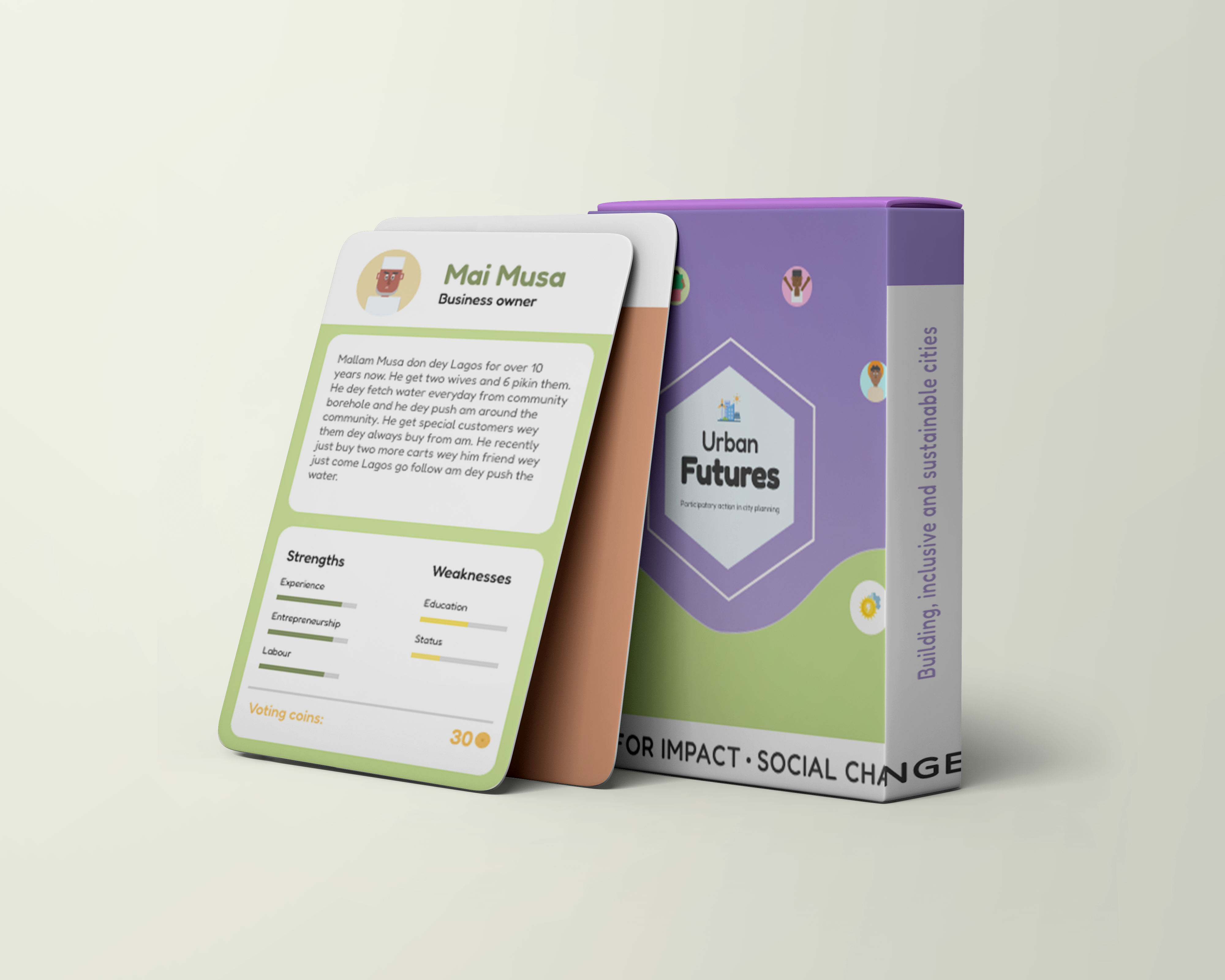
Urban Futures is a gamified urban planning tool developed as part of the Fair Shared City Approach — an exploratory research method focused on collaborative solutions to community challenges. As part of the 1st Urban Lab project in Lagos, the goal was to introduce a playful "breaking the ice" process that actively involves women from low-income communities in urban decision-making.
Contribution
My Role
Led end-to-end UIUX & interaction design across physical and digital phases
Designed paper wireframes and card archetypes for the physical game
Conducted virtual beta testing and iterated based on feedback
Designed hi-fi web app and mobile app including motion design and character rigging
Created sitemap and user flow for the digital version
Developed persona research to define the digital product's target audience
The Challenge
Bridging the governance gap
"How might we engage women from diverse backgrounds in the spatial planning and decision-making process of their cities?"
Exclusion of Women in Urban Governance
Women make up a significant portion of urban residents and play vital roles in informal systems, yet are systematically excluded from planning and decision-making. Urban environments are predominantly designed by men, for men.
Lack of Participatory Planning
Traditional planning processes are top-down, with minimal community input. Decisions are often made by distant policymakers disconnected from local realities.
Limited Capacity for Implementation
While innovative plans may be developed, there is often a lack of institutional capacity, funding, and political will to implement them effectively.
Research
Fair Shared City Framework
Researchers from the University of Lagos Department of Urban and Regional Planning and NGO activists used the Fair Shared City framework and the 3Rs — Recognition, Redistribution, and Resilience — to interview women of all ages in low-income communities in Oworonshoki, Lagos.
Overarching Goal
Fair Shared City
Core Values
Accessibility
Affordability
Co-governance
Focus Areas
Social Justice
Spatial Justice
Environmental Justice
Digital Equity
Priority Areas
Examples (non-exhaustive)
Equal access to administrative & political decision-making
Equal access to finances & services
Equal share of time & resources
Public spaces
Recreation
Income opportunities
Urban regeneration
Mixed-income housing
Safety & security
Sanitation & water
Basic health services
Mobility & transportation
Building & drainage
Waste & pollution
Green spaces
Access to hardware & software
Income opportunities (trade, finance)
Buildings & markets
Governance
Online education
Proposed Framework of the Fair Shared City for Lagos, Nigeria
Phase 01
Physical Design
Why Gamification?
Foster Education
Teach urban planning fundamentals, priority-setting, and stakeholder collaboration through hands-on play.
Build Collaboration
Foster genuine dialogue and teamwork across diverse community groups who may never otherwise meet.
Inspire Innovation
Encourage locally grounded, practical, creative solutions to real urban challenges.
Designing the Card System
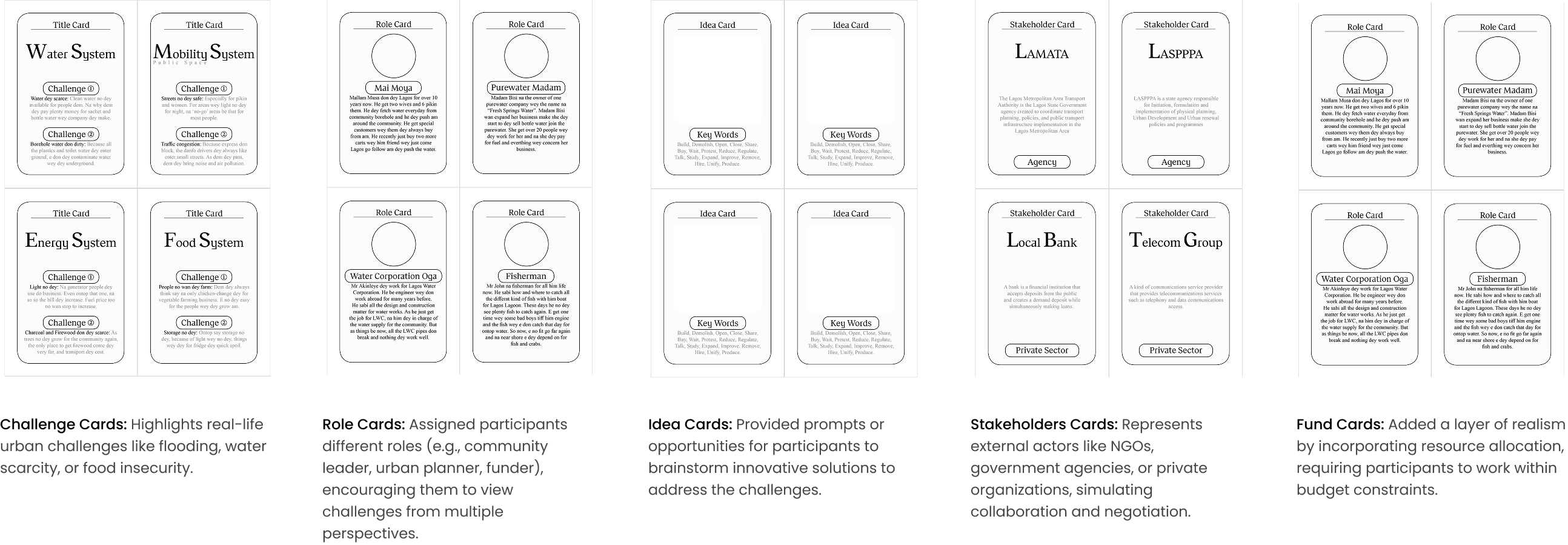
The game consists of 5 card types. Guiding principles were established for each and tested for usability and clarity.
Challenge Cards
Real-life urban challenges — flooding, water scarcity, food insecurity — grounding every round in lived experience.
Role Cards
Assigned roles (community leader, urban planner, funder) so participants view challenges from multiple perspectives.
Idea Cards
Prompts for brainstorming innovative solutions — structured enough to guide, open enough to spark creativity.
Stakeholder Cards
External actors (NGOs, government agencies, private organisations) simulating real-world collaboration and negotiation.
Fund Cards
A resource allocation layer requiring participants to work within budget constraints — mirroring actual planning trade-offs.
Virtual Beta Test
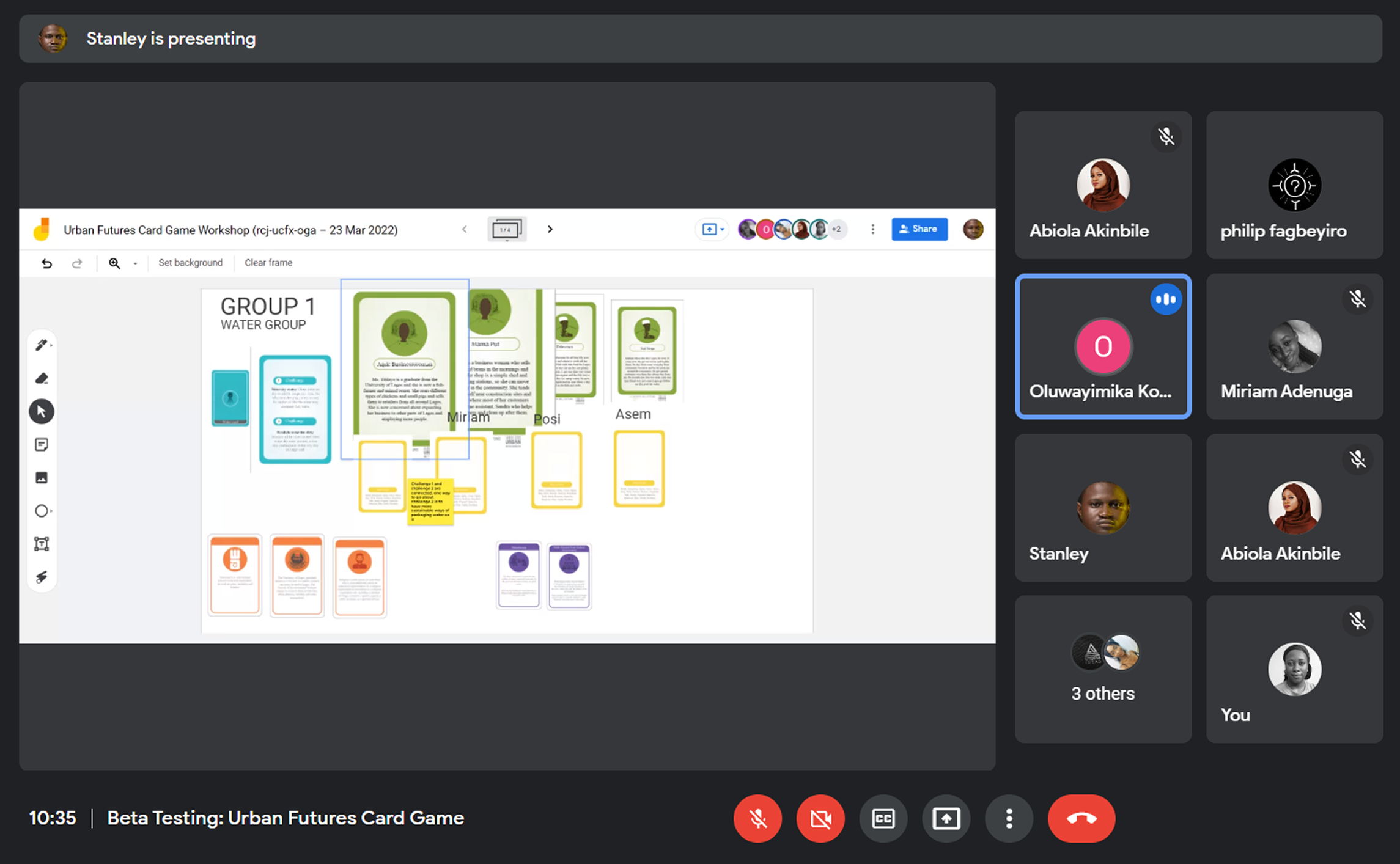
A beta-test was conducted with the research team to gather feedback and refine the game. Instructions were rated as direct and navigation as intuitive.
Community Launch — Oworonshoki
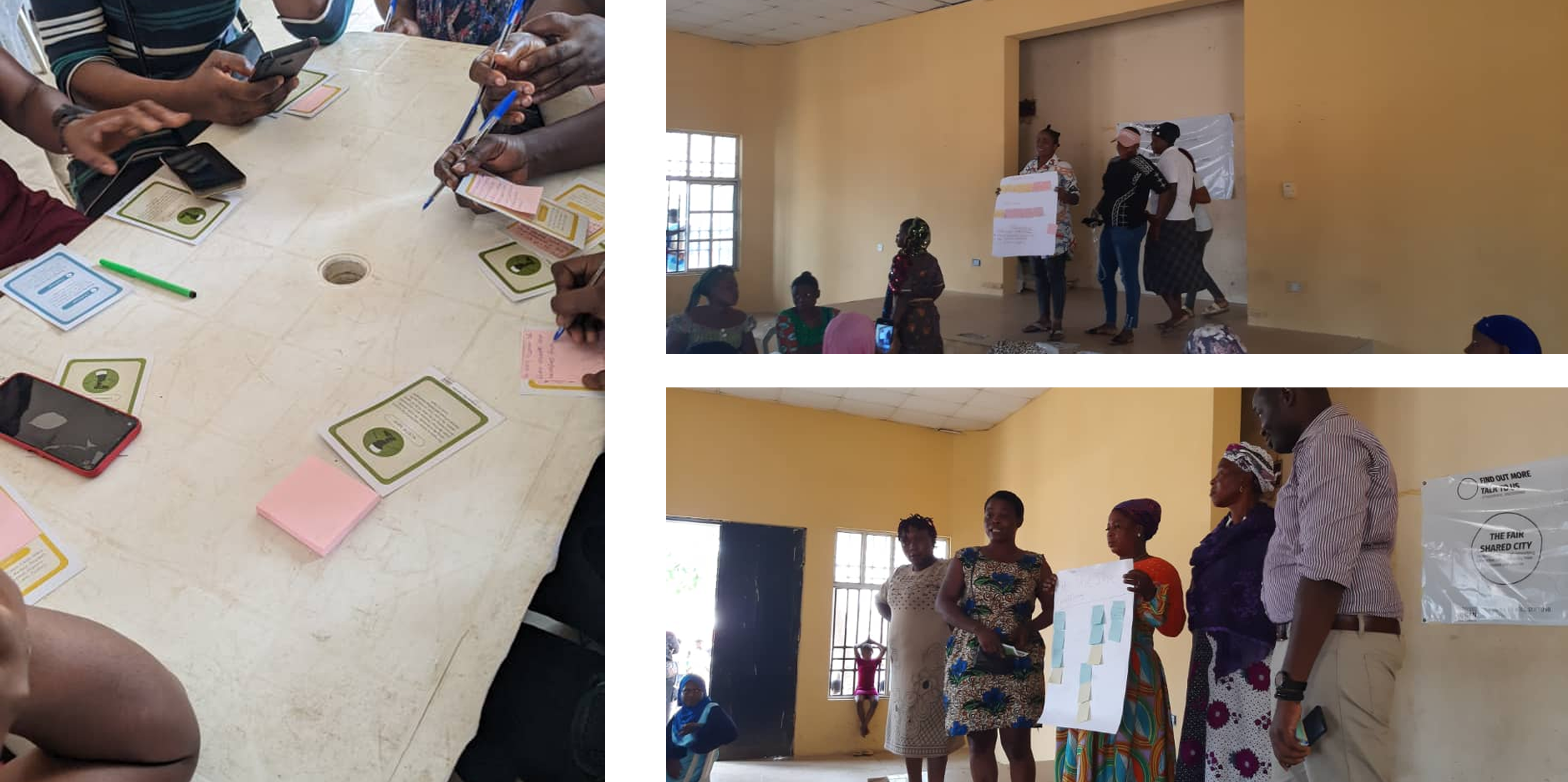
The prototype was launched in the community with moderators assigned to each group to support participants. The session was a major success.
Feedback & Impact
90%
Participant attendance
Over 30 women from different parts of Oworonshoki participated in the first urban lab, many meeting each other for the first time.
90%
Satisfaction rate
Participants rated the card game 'Very good' and 'Excellent' and were excited to engage with the team and each other.
5
Working proposals generated
Solutions addressed real, lived challenges. Proposals covered Water, Food, Mobility, Energy and Housing.
Phase 02
Digital Design
Based on the success of the physical game, a digital version was developed to explore urbanisation challenges across developing countries — serving as an educational game for urban design students, NGOs, human rights activists, and design professionals globally.
Target Audience
Roles
- Urban design students
- Urban Design Professionals
- NGOs
- Human rights activists
Demographics
- Women
- Age 13+
- High school certificate and above
- Students, civil servants, creatives
Sitemap & User Flow
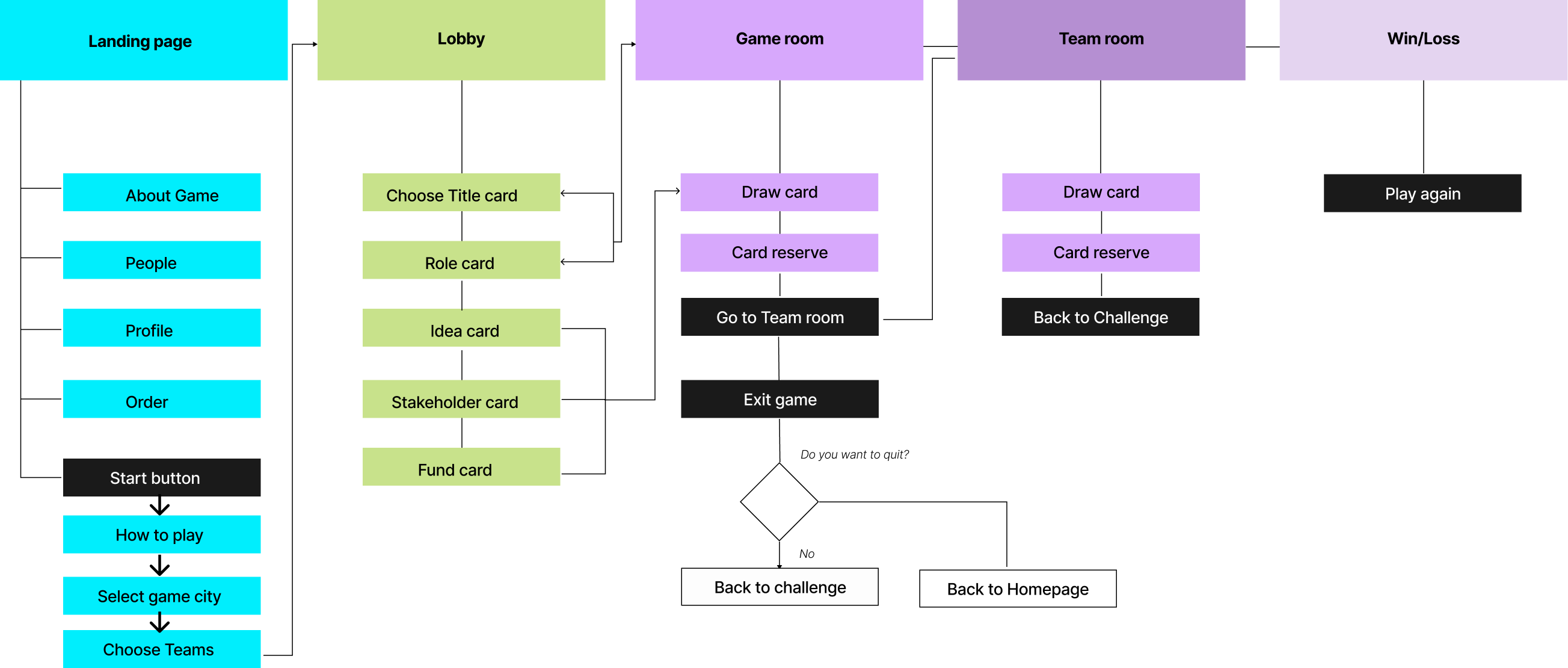
I planned a high-level sitemap to determine the user flow of the game — detailed enough to iterate on, yet simple enough to communicate to stakeholders.
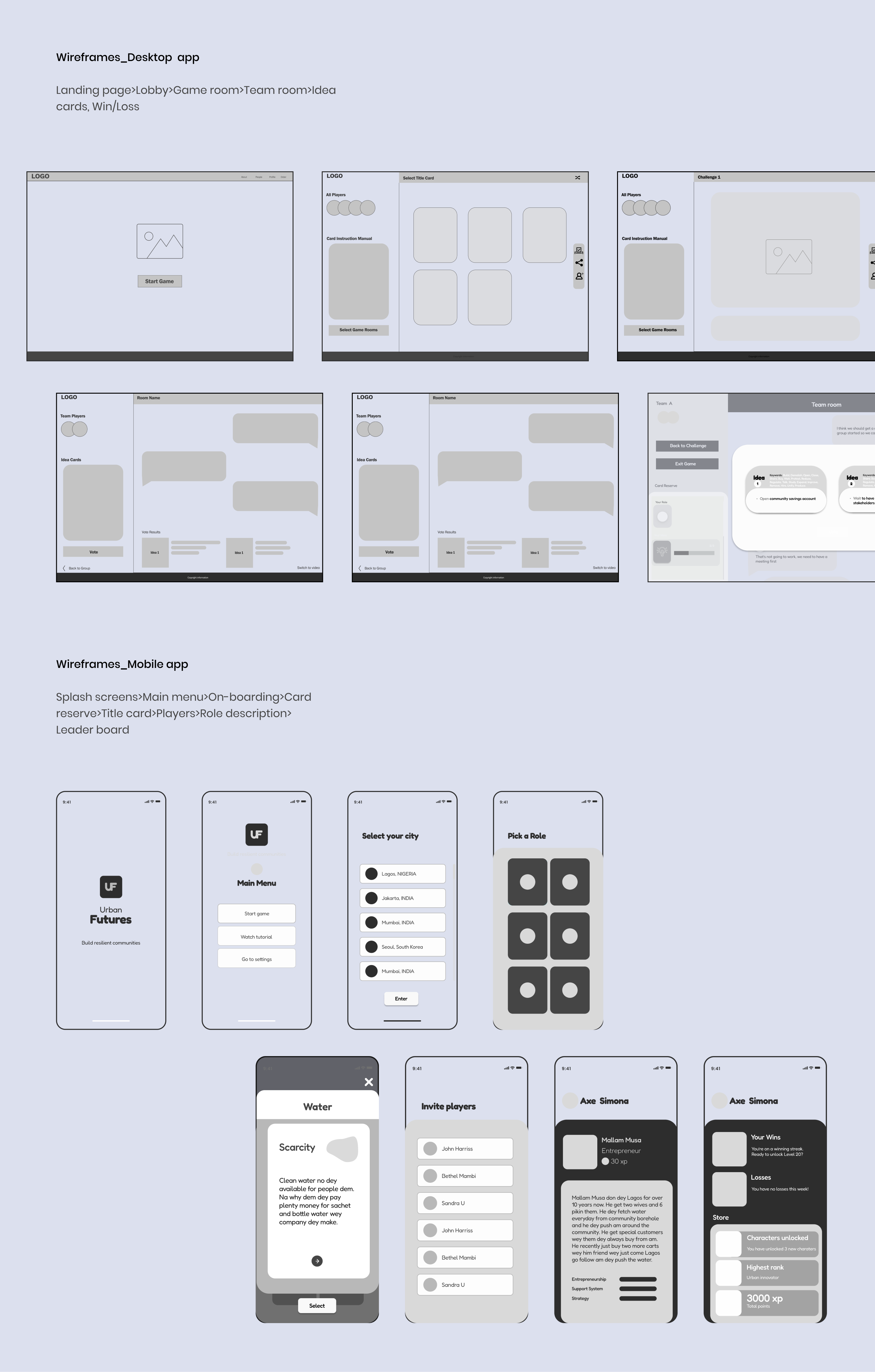
Mobile App Wireframes
High-Fidelity Web Design
I worked on the web design, motion design, and character rigging — creating illustrated characters inspired by real community members and leaders in Lagos.
Mobile High-Fidelity Prototype
Reflections
What I Learned
"Designing for low-literacy users taught me that clarity is not just visual — it is structural. Every card, every interaction had to work without assumptions about reading ability."
"Gamification is a powerful equalizer. Giving women the language and format of a 'game' removed the intimidation of formal governance processes and unlocked genuine participation."
"The transition from physical to digital forced me to think carefully about what makes a tactile experience translate to a screen — especially for mobile-first users in the Global South."
"Community testing is irreplaceable. Watching real participants navigate the prototype in Oworonshoki revealed gaps no desk research could have uncovered."